


The global macroeconomic landscape of 2026 demands investment strategies that combine absolute capital protection with reliable yield generation. As financial markets navigate shifting interest rates and technological disruptions, smart capital is increasingly returning to tangible fundamentals.
In this scenario, direct investment in US residential real estate stands out as the ultimate strategic asset class. Driven by deep structural supply shortages and demographic shifts, the American housing sector offers a level of resilience that few other global markets can replicate.
For forward-thinking investment firms and private individuals, the integrated approach of 3MA Real Estate LLC transforms this macroeconomic potential into consistent streams of passive income.
1. The Multifamily and Single-Family Rental Structural Boom
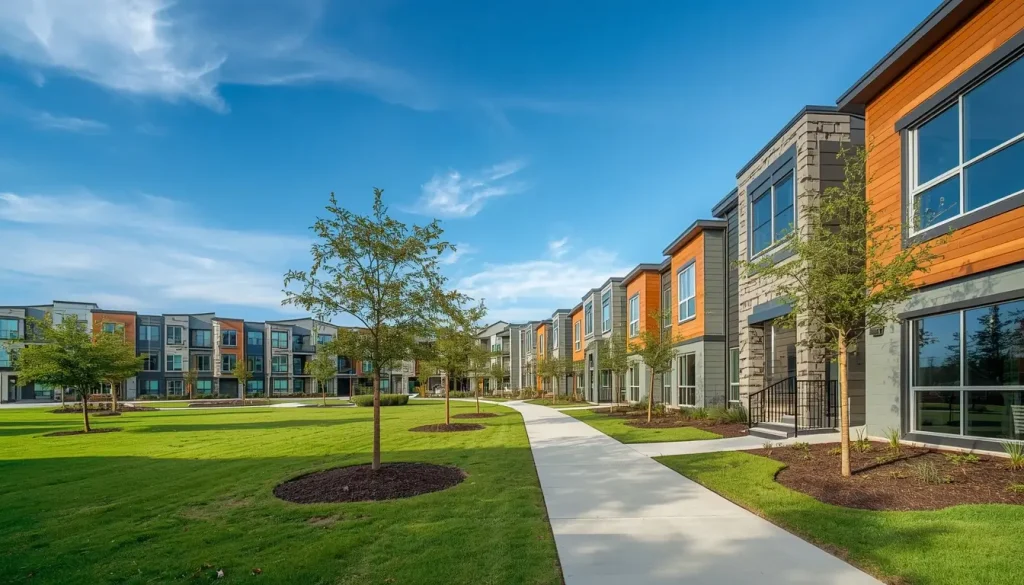
The US residential market in 2026 is not simply a safe haven, but a growth engine powered by a real supply shortage.
- Chronic Under-Supply: The United States suffers from a structural deficit of millions of housing units, accumulated over the past decade of slower construction rates.
- Demographic Shift: Younger generations (Millennials and Gen Z) increasingly prefer the flexibility of renting over ownership, expanding the pool of qualified tenants.
- Counter-Cyclical Resilience: Regardless of stock market fluctuations, the need for housing remains constant, ensuring historically lower default rates in the residential sector compared to commercial or retail.
2. Inflation Protection Through Dynamic Rents
With global inflationary pressures continuing to impact portfolios, the nature of US residential lease agreements provides immediate capital protection.
- Short-Term Renewals: Unlike multi-year commercial leases, US residential leases typically last 12 months. This allows landlords to quickly adjust rental rates to match real market inflation.
- Real Value Preservation: Physical real estate retains intrinsic value that appreciates alongside construction costs, protecting the investor’s purchasing power over the long term.
3. The Co-Investment and Value-Add Advantage
 Success in direct investing lies in the ability to actively drive asset performance. Identifying undervalued residential properties allows for immediate value creation through targeted interventions.
Through Value-Add strategies—such as smart renovations and energy-efficiency optimization—investors can directly increase the property’s Net Operating Income (NOI), triggering an automatic rise in asset value.
This is the core pillar of the investment line at 3MA Real Estate LLC: aligning interests through the direct Co-Investment of our own capital to maximize growth and lower the risk profile for our partners.
4. End-to-End Management: Seamless Passive Income
One of the main barriers for international investors choosing the direct US real estate market is managing properties from afar. In 2026, technology and local expertise completely redefine this process.
Utilizing advanced tenant screening tools and smart pricing algorithms eliminates operational stress for the investor, guaranteeing:
- Yield Optimization: Rental rates aligned in real time with market peaks.
- Screened Tenants: Drastic reduction in turnover rates and payment delays.
- Transatlantic Footprint: The strategic benefit of partnering with a firm that combines deep Italian roots with on-the-ground execution teams in institutional US markets.
Conclusion
In 2026, direct US residential real estate investment remains an essential strategic move. It offers the perfect balance between the stability of a tangible asset and the scalability of a liquid, transparent market.
Navigating this opportunity requires technical expertise and local boots on the ground. Partnering with a single provider across the entire asset lifecycle—from quantitative underwriting to day-to-day operations—is the key to turning real estate into a secure, long-term engine for passive wealth.